
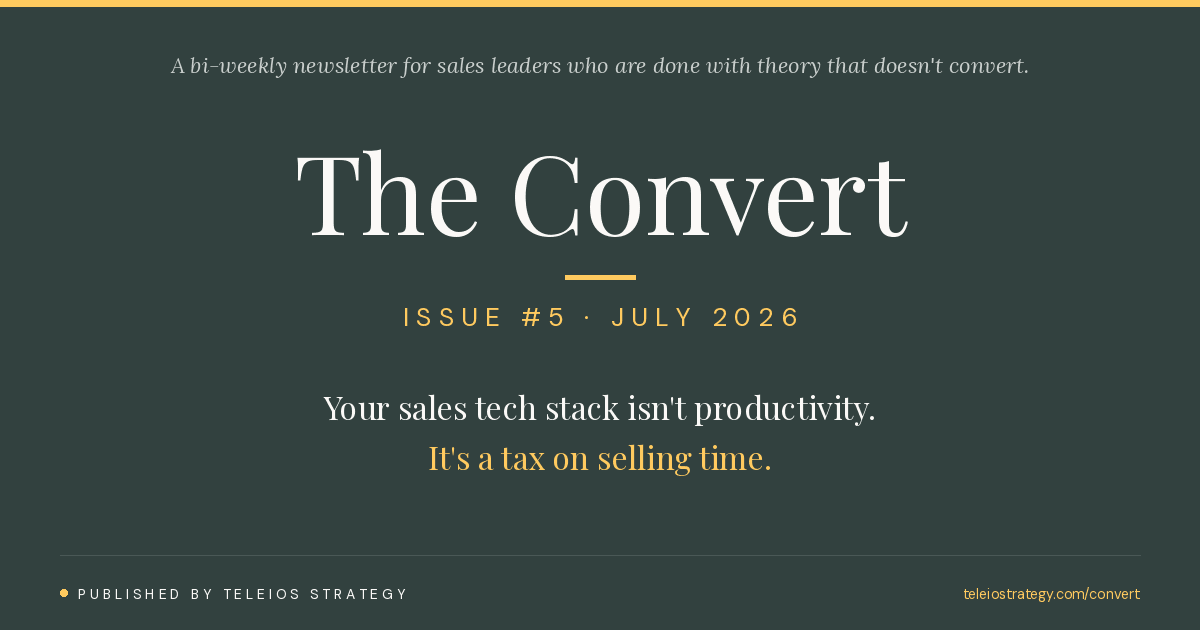
𝘠𝘰𝘶𝘳 𝘴𝘢𝘭𝘦𝘴 𝘵𝘦𝘤𝘩 𝘴𝘵𝘢𝘤𝘬 𝘪𝘴𝘯'𝘵 𝘱𝘳𝘰𝘥𝘶𝘤𝘵𝘪𝘷𝘪𝘵𝘺. 𝘐𝘵'𝘴 𝘢 𝘵𝘢𝘹 𝘰𝘯 𝘴𝘦𝘭𝘭𝘪𝘯𝘨 𝘵𝘪𝘮𝘦.
Every new sales tool gets sold the same way: this one will finally gives your producers their time back. The data says otherwise.
- Gartner projects sales enablement budgets to grow 50% by 2027 — most of it on more tools, not fewer
- Producers still spend just 28–34% of the week actually selling — flat for five years, despite tens of billions invested
- Half of sellers say they're overwhelmed by the number of platforms they're required to use
Here's the reality: every tool carries its own login, its own data-entry tax, its own dashboard, its own context switch. The cost doesn't land on the org. It lands on the producer — silently, in minutes of selling time.
The misconception is that because we have more tools available than ever, we should carry bigger tool belts than ever.
The best sales producers and leaders don't. They've stopped treating AI as one more tool in the belt and started using it as an orchestration layer — one that collapses five workflow steps into one conversation.
Issue #5 of The Convert unpacks the problem and the solution, including the Selling-Time Tax Audit — a one-page worksheet that scores every tool against three columns: minutes-per-producer-per-week, revenue-per-minute, and kill/keep/consolidate.
Access the Issue for free here:https://lnkd.in/evwp82G8
The shift isn't more tools. It's fewer, smarter ones — and the selling time you get back.
If your stack keeps growing but your deal cycles aren't shrinking, the math won't fix itself.